
Industry6 min
Multiple carriers announce service resumption as Red Sea lanes see a phased return
After more than two years of Cape diversions, Red Sea–Suez traffic is staging a partial return as several majors announce routing changes—still a cost/transit trade-off, not a security all-clear.
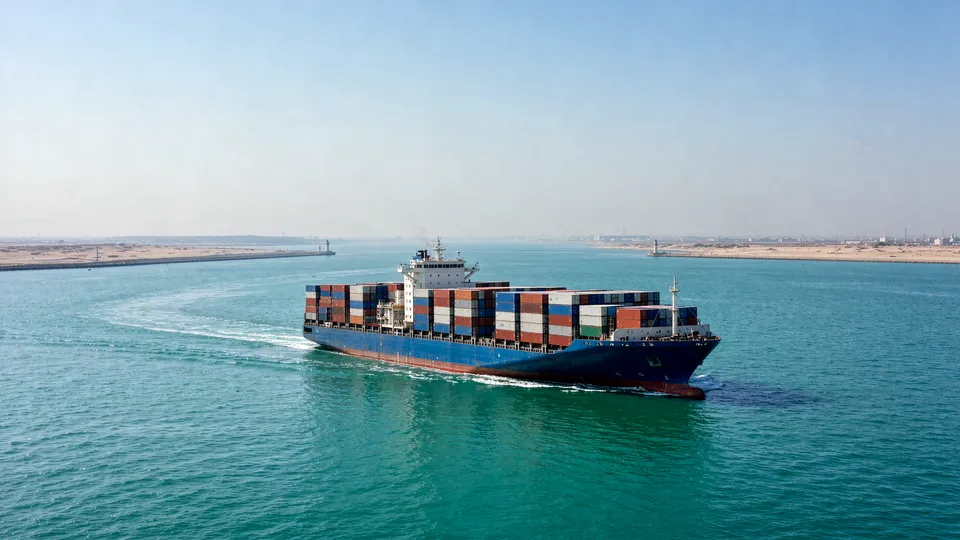
After more than two years of large-scale Cape of Good Hope diversions, Red Sea–Suez Canal lanes are seeing a phased return: container and tanker transit volumes are rising, and several major carriers have densely announced routing adjustments. This does not mean regional security is back to normal—it is a structural choice under stacked cost, transit-time, and capacity pressure.
Vessel-tracking data show about 1,232 ships transited the Suez Canal in August this year, with throughput stably above 1,200 ships for two consecutive months; year on year, vessel count rose about 28% and tonnage about 43%.
Carriers are accelerating resumption moves
Recent resumption pacing has sped up:
- 16 September: OOCL’s 24,188 TEU ultra-large container ship OOCL Portugal transited the Suez Canal from Belgium toward China.
- 14 September: Maersk and Hapag-Lloyd announced that four Gemini Cooperation services—AE5, AE11, AE12, and ME2—would shift from Cape diversions back to Red Sea–Suez (including AE15 and AE19 adjusted earlier, six Gemini services have now resumed Red Sea routings).
- 14 September: MSC announced restoration of Indusa (Indian Subcontinent–US/Mexico) operations via the Red Sea; initially westbound only, with eastbound still diverting via the Cape.
Structural pressure behind the return
Industry analysis notes that the vessel return does not mean the Red Sea is absolutely safe; it reflects adjustments under multiple pressures:
- Prolonged Cape diversions drove high shipping costs and transit delays;
- Global port congestion and constrained Panama Canal capacity continue to intensify pressure, pushing carriers back toward the Red Sea core corridor.
Note: overall Red Sea recovery remains highly uncertain. Not all major alliances have followed with resumption plans, and fully stable normalized sailings are still some way off. Carriers say they will keep monitoring security conditions and adjust voyage plans and network designs as needed.
Recommendations for shippers
- Build buffers into shipping plans; do not equate “resumption announced” with “end-to-end stable and on time.”
- For time-sensitive cargo, confirm with your account manager whether the current routing is via the Red Sea or Cape diversion, plus the ETA volatility range.
- Watch eastbound/westbound differences (e.g., some services resumed westbound only) and avoid scheduling from old assumptions.
PTP Supply Chain will closely track Red Sea transit developments and keep customers updated. To assess Eurasia capacity and transit options, visit FBA headhaul or Contact us.
